

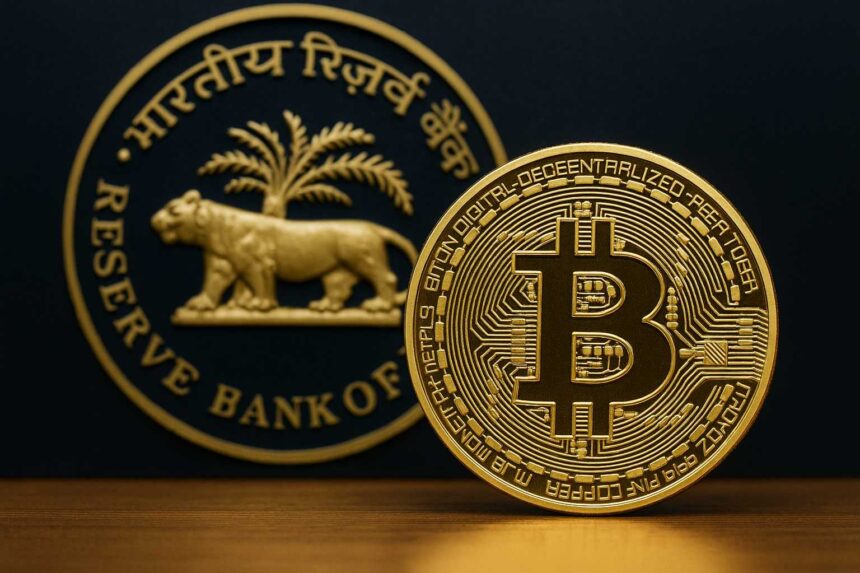
The Central Bank of India reiterates its concern about crypto and points out its risks to the financial sector. As reported by IndiaTimes.com, the Reserve Bank of India continues to express strong concerns over the risks posed by cryptocurrencies.
Under Governor Sanjay Malhotra’s leadership, the Reserve Bank of India (RBI) has once again stressed that cryptocurrencies could bring risks to the stability of the nation and its monetary policies. The RBI recently pointed out that digital assets might make it hard for the central bank to regulate the economy, repeating old fears about cryptocurrencies.
The central bank has made this statement as more people globally use digital currencies and at home are interested in DeFi and stablecoins. Governor Malhotra pointed out several threats, for example, capital leaving the country, avoiding rules, and the possibility that cryptocurrencies might disturb India’s financial stability. Speaking on the matter, Malhotra said cryptocurrencies create distinct problems for monetary policy and may introduce new risks to the financial system.
This progress is ordered by the Supreme Court of India, who asked the government to create regulations for cryptocurrencies, not to ban them. In its ruling, the court mentioned that countries such as the United States and the European Union are now including digital assets into their financial regulations. For this reason, the RBI is determined and states that cryptocurrencies may put India’s economy at risk if regulations are not implemented.
The government has set up a team to assess crypto regulation and come up with a reasonable way to handle it. There is currently no set date for new regulations, so everyone in India’s crypto market is left in the dark. Many in the industry feel that set rules would help promote new ideas and answer the RBI’s worries, but the central bank appears to be moving slowly. Recently, India’s crypto market has expanded greatly, bringing in millions of retail investors and many startup companies.
Even so, past restrictions from the RBI and its latest warnings still affect the sector negatively. The worries of the central bank over non-traditional financial services such as stablecoins and DeFi platforms make it more difficult to create regulations. As cryptocurrencies become more common in world markets, India has to handle the conflicting needs to support new ideas and prevent risks to its financial system. At present, the RBI’s continued caution indicates that getting new rules for cryptocurrencies in India may take some time. According to announcements by the Reserve Bank of India and recent rules set by the Supreme Court.
👉 What to read next?